
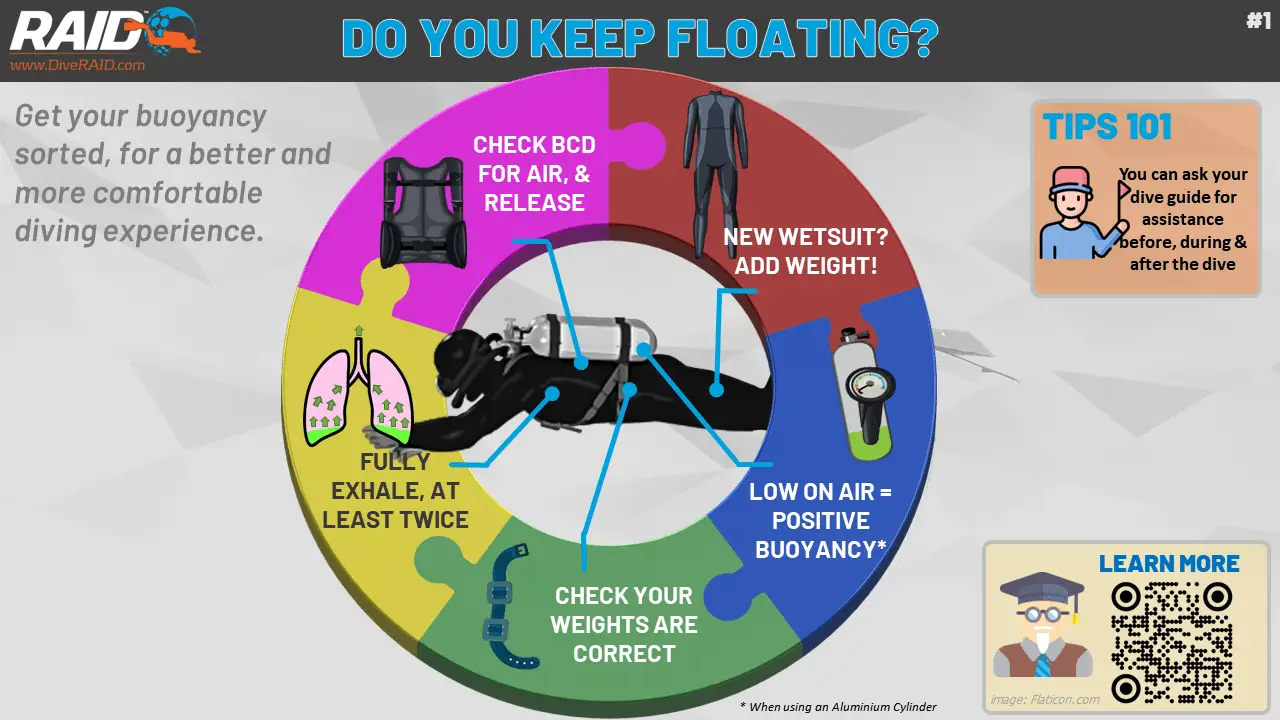
 Wetsuits are made from neoprene rubber, this material is formed with lots of small bubbles and it’s these that help insulate you from the cooler water. When a wetsuit is brand new there are more bubbles, as it gets used these bubbles burst/leak reducing the positive buoyancy of your wetsuit. So you will likely need additional weight for a new suit, the amount will depend on the design/thickness of the suit.
 It may seem obvious, but are your weights correct? Weights can often be confusing, they are available in different weights and units. For example, a 2Lb weight Vs a 1Kg weight; think that’s not important?
4x 2Lbs = 8Lbs = 3.6Kg
4x 1Kg = 4Kg = 8.8Lbs
So you can see why knowing the exact amount of weight you use is important. This is one excellent use of your dive log, which is to record these weights and units. Remember these weights are only valid for one equipment configuration.
 Aluminum scuba cylinders have a characteristic of changing from slightly negative to slightly positively buoyant as the air pressure inside reduces. For example, an AL80 (11 liters) cylinder with 200BAR is about 0.7Kg negatively buoyant, but when it reaches 50BAR its 1.2Kg positively buoyant. This is why divers often have trouble maintaining neutral buoyancy during a safety stop.
 So using your lungs is a natural & instinctive process, but you probably aren`t so used to having to control how much you breathe in and out. While diving the use of our lungs is the fundamental part of controlling our buoyancy. It allows the fine control we need to achieve and maintain neutral buoyancy.
A common problem when you can’t sink (especially on the initial descent) is that air is trapped in the bottom of your lungs. This is common as we often don’t fully breathe out on every breath, so as we descend this air gets compressed in our lungs and builds up. To overcome this make a small breath in and breathe out everything squeezing your diaphragm as you do so. It may take a few breaths like this before having an effect.
 Keeping your diving equipment consistent is one of the quick ways to improve your buoyancy. Almost all the gear we wear affects our buoyancy, when we learn how to control it in a particular setup we can focus and fine-tune our buoyancy control. Obviously, this is easier if you own your own gear, which isn`t always an option for everyone.
So, always make sure any trapped air is released (e.g. in BCD, wetsuit, etc), as this will change your buoyancy as your depth changes (if it’s a compressible object); again making your dive less enjoyable.