
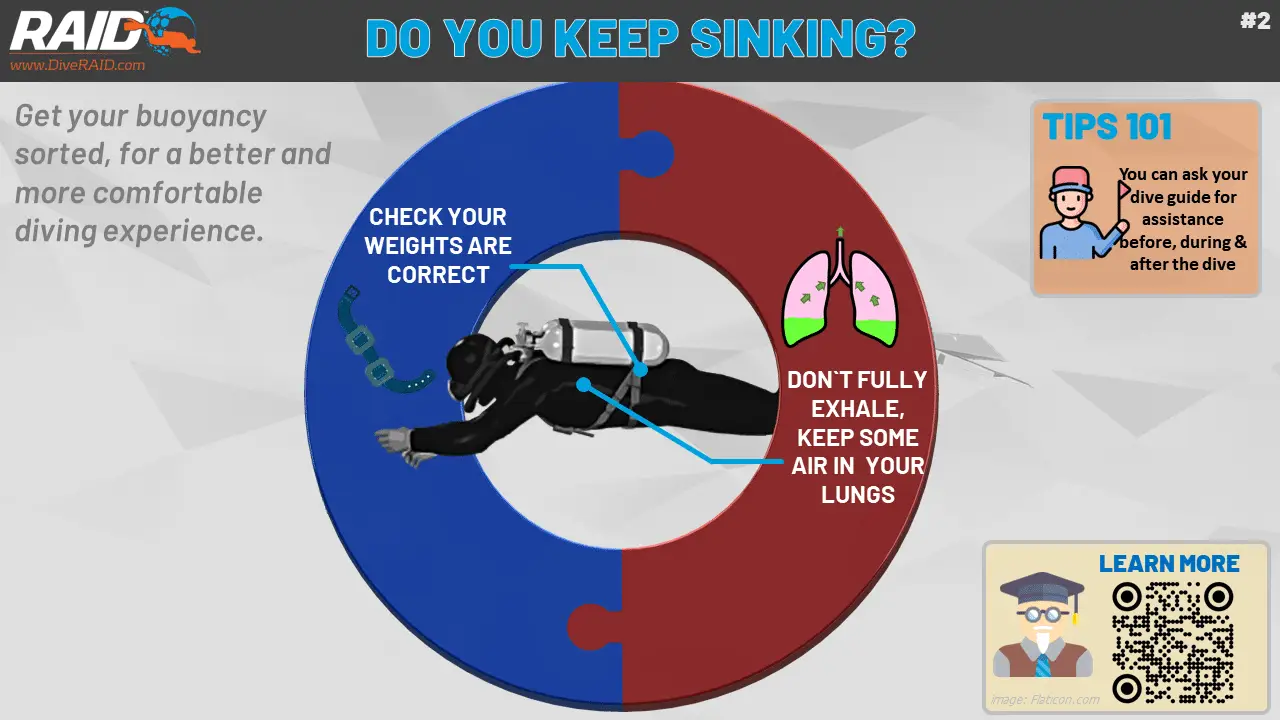
 So using your lungs is a natural & instinctive process, but you probably aren`t so used to having to control how much you breathe in and out. While diving the use of our lungs is the fundamental part of controlling our buoyancy. It allows the fine control we need to achieve and maintain neutral buoyancy.
A common problem when you can’t sink (especially on the initial descent) is that air is trapped in the bottom of your lungs. This is common as we often don’t fully breathe out on every breath, so as we descend this air gets compressed in our lungs and builds up. To overcome this make a small breath in and breathe out everything squeezing your diaphragm as you do so. It may take a few breaths like this before having an effect.
 It may seem obvious, but are your weights correct? Weights can often be confusing, they are available in different weights and units. For example, a 2Lb weight Vs a 1Kg weight; think that’s not important?
4x 2Lbs = 8Lbs = 3.6Kg
4x 1Kg = 4Kg = 8.8Lbs
So you can see why knowing the exact amount of weight you use is important. This is one excellent use of your dive log, which is to record these weights and units. Remember these weights are only valid for one equipment configuration.